HRV & RHR: The Two Heart Metrics That Reveal More About Your Health Than You Think
Mar 3, 2026
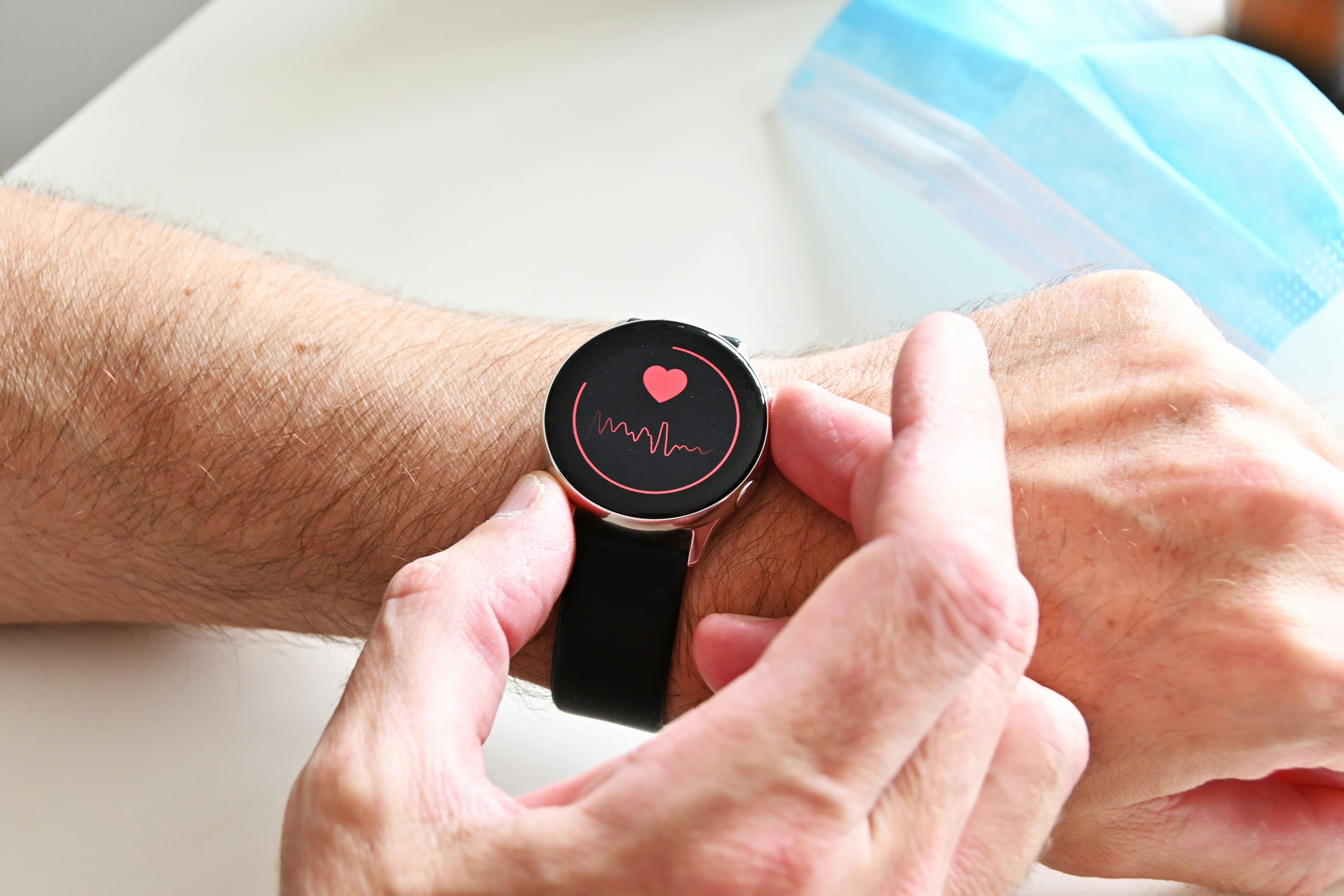
As a coach, I don’t just look at mileage and pace. I look at what the body is telling us beneath the surface. Two of the most powerful markers endurance athletes can track daily are resting heart rate (RHR) and HRV (heart rate variability).
These two numbers, when interpreted together, can tell you whether to push, hold steady, or back off — long before your legs start screaming.
Resting Heart Rate (RHR) is the number of times your heart beats per minute when you are fully at rest — ideally measured first thing in the morning before getting out of bed. If you use a Garmin device, it automatically measures your RHR at 12am.
Your RHR reflects how hard your heart needs to work to maintain basic bodily functions. There is a perception that the lower your RHR, the fitter you are, but that is not necessarily true. As a 100-mile athlete, my RHR is approx 56 BPM, which according to the common belief is too high to be very fit.
A higher-than-normal RHR (relative to your baseline) can signal the following:
Fatigue
Dehydration
Getting sick
Psychological stress
Alcohol consumption
Overreaching or overtraining
The key word is baseline. Your RHR trend matters more than the absolute number.
Heart Rate Variability (HRV) is the variation in time between heartbeats. It reflects the balance between your sympathetic (fight-or-flight) and parasympathetic (rest-and-digest) nervous systems.
We are specifically referring to resting HRV (rHRV) — measured under consistent conditions, usually in the morning. Once again, if you use a Garmin device, your HRV will be automatically measured at 12am.
When measuring HRV, each individual athlete is different, with some athletes trending a high HRV and others a lower HRV. This does not mean that an athlete with a higher HRV is fitter or better conditioned than an athlete with a lower HRV.
Again, the keyword is baseline. Your HRV trend matters more than an individual number.
That said, the following applies:
High HRV
Strong parasympathetic dominance.
Good recovery state.
High adaptability to stress.
Nervous system is resilient.Low HRV
Sympathetic dominance.
Stress load is high.
Poor recovery.
Body is under strain (training, life stress, illness, alcohol)
There is a train of thought that says there is a high HRV and a low HRV and that a high HRV is what you are aiming for. I disagree completely with this line of thinking as everyone has an individual HRV. I think the differentiation should be that we use a trend HRV, meaning the average trend over a few weeks should represent the higher value HRV and any differentiation from the trend towards the lower side is the lower HRV score.
Again, the keyword is baseline. Your HRV trend matters more than an individual number.
Think of HRV as your nervous system readiness score
So, what does RHR and HRV mean for you, the athlete and why do I as a coach put so much score to it?
Endurance training stresses the cardiovascular system, the autonomic nervous system and the hormonal system, thus if you only measure pace and distance, you miss what’s happening internally.
Monitoring RHR and HRV allows you to:
Detect overtraining early
Adjust intensity before breakdown occurs
Identify illness before symptoms appear
Understand how alcohol affects performance
Separate life stress from training stress
This is especially critical for marathon athletes, ultra-athletes and 100-mile athletes, where the training blocks are long and hard and cumulative fatigue is a real factor.
RHR and HRV are individual metrics that tell us a lot with each metric giving us insight but together, they give clarity.
Below is how I interpret combinations as a coach.
High HRV and low RHR
Optimal recovery.
Parasympathetic system is dominant.
System is fresh and resilient.
Green light. Quality session or long run appropriate.
Low HRV and high RHR
High stress load.
Sympathetic overdrive.
Possible illness, overtraining, dehydration, or alcohol impact.
Red flag. Reduce intensity or rest.
High HRV and high RHR
Possible acute stress or excitement.
Body may be compensating.
Could indicate early illness or mental stress.
Proceed cautiously. Moderate intensity.
Low HRV and low RHR
Possible accumulated fatigue.
Nervous system suppressed.
Could indicate overreaching.
Reduce load and prioritise recovery
What Your Data Is Telling You
Overtraining
Gradually decreasing HRV
Gradually increasing RHR
Poor sleep
Mood changes
Plateauing or declining performance
This is classic autonomic imbalance.
If ignored, it can progress to non-functional overreaching or overtraining syndrome.
Getting Sick
Sudden spike in RHR (5–10 bpm above baseline)
Sharp drop in HRV
This can occur 24–48 hours before symptoms.
As a coach, I’ll immediately pull intensity and switch to easy aerobic work or rest.
Alcohol and HRV/RHR
Elevates RHR overnight
Disrupts deep sleep
Increases sympathetic dominance
Suppresses HRV (sometimes dramatically)
Even 2–3 drinks can:
Reduce recovery quality
Impair next-day performance
Alter training readiness
For serious endurance athletes, alcohol is one of the biggest hidden performance limiters.
Stress
Work pressure, family stress, travel, emotional strain — your nervous system does not distinguish between training stress and life stress.
Reduced HRV
Elevated RHR
Poor sleep metrics
The Big Coaching Principle
Fitness is built during recovery — not during training.
HRV tells you if your nervous system can absorb stress.
RHR tells you how hard your cardiovascular system is working at rest.
When both are trending positively, you are adapting.
When both are trending negatively, you are accumulating strain.
The most successful endurance athletes are not the ones who train the hardest.
They are the ones who:
Respect recovery
Listen to data
Adjust ego
Train consistently over year
Use HRV and RHR not as restrictions, but as tools for longevity.
Train hard when your body is ready.
Back off when your physiology whispers — not when it screams.